65 stories in Sensing & IoT.
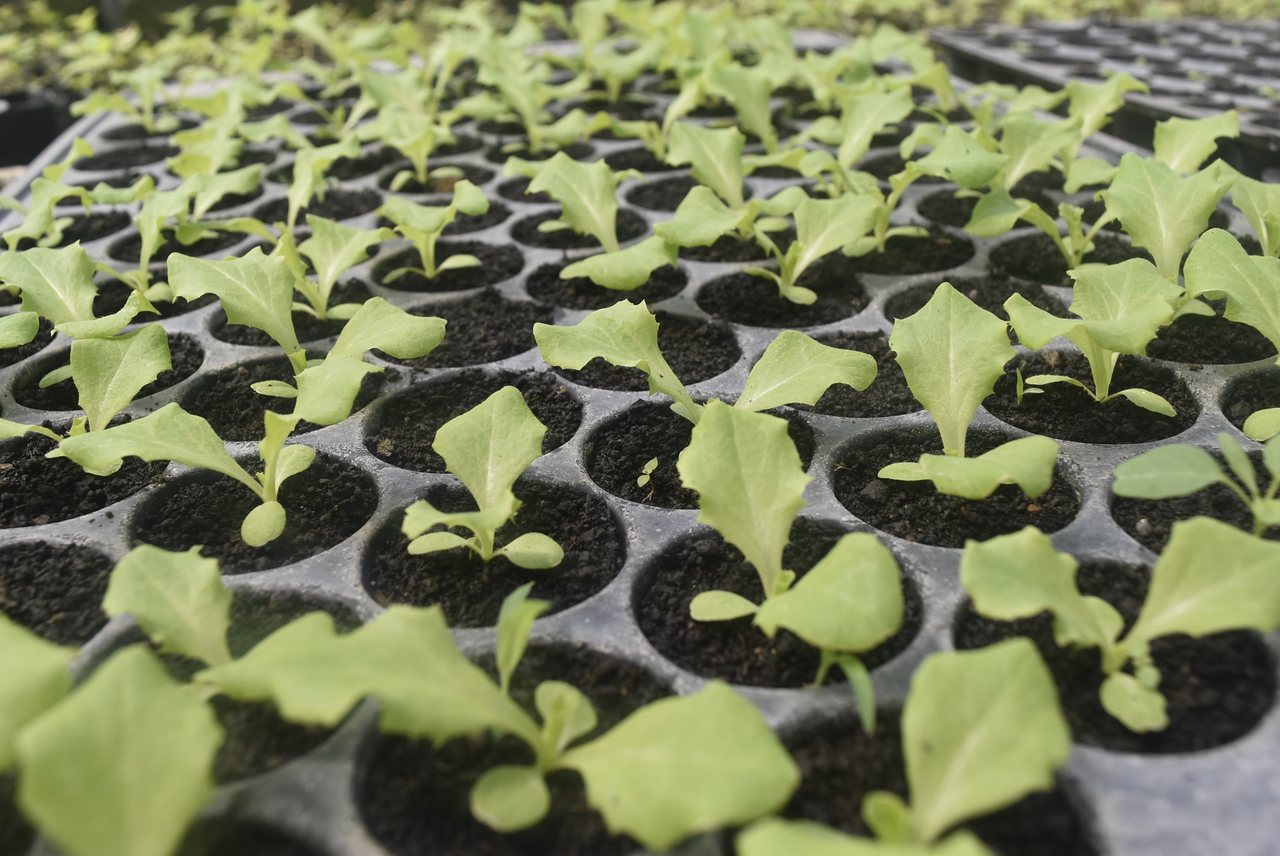
Wisconsin engineers reported protected electrochemical nitrate sensors in June 2024, with flexible sensing stickers and buried rods designed to follow nutrient and water movement through the soil profile.
Source UW–Madison News
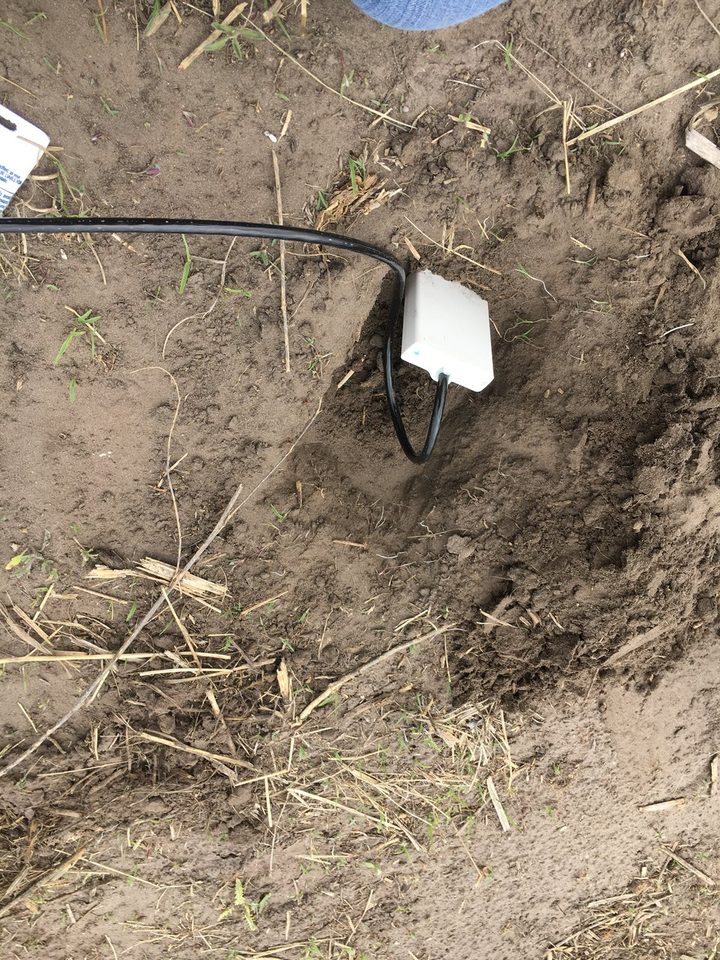
A University of Glasgow-led study reported printed biodegradable sensing patches in April 2025, combining replaceable measurement elements with reusable electronics to reduce waste from agricultural monitoring.
Source University of Glasgow
A Northwestern-led team reported a microbial fuel-cell design in January 2024 that powered soil-moisture and touch sensors, exploring an alternative to replacing batteries in distributed monitoring systems.
Source Northwestern Now
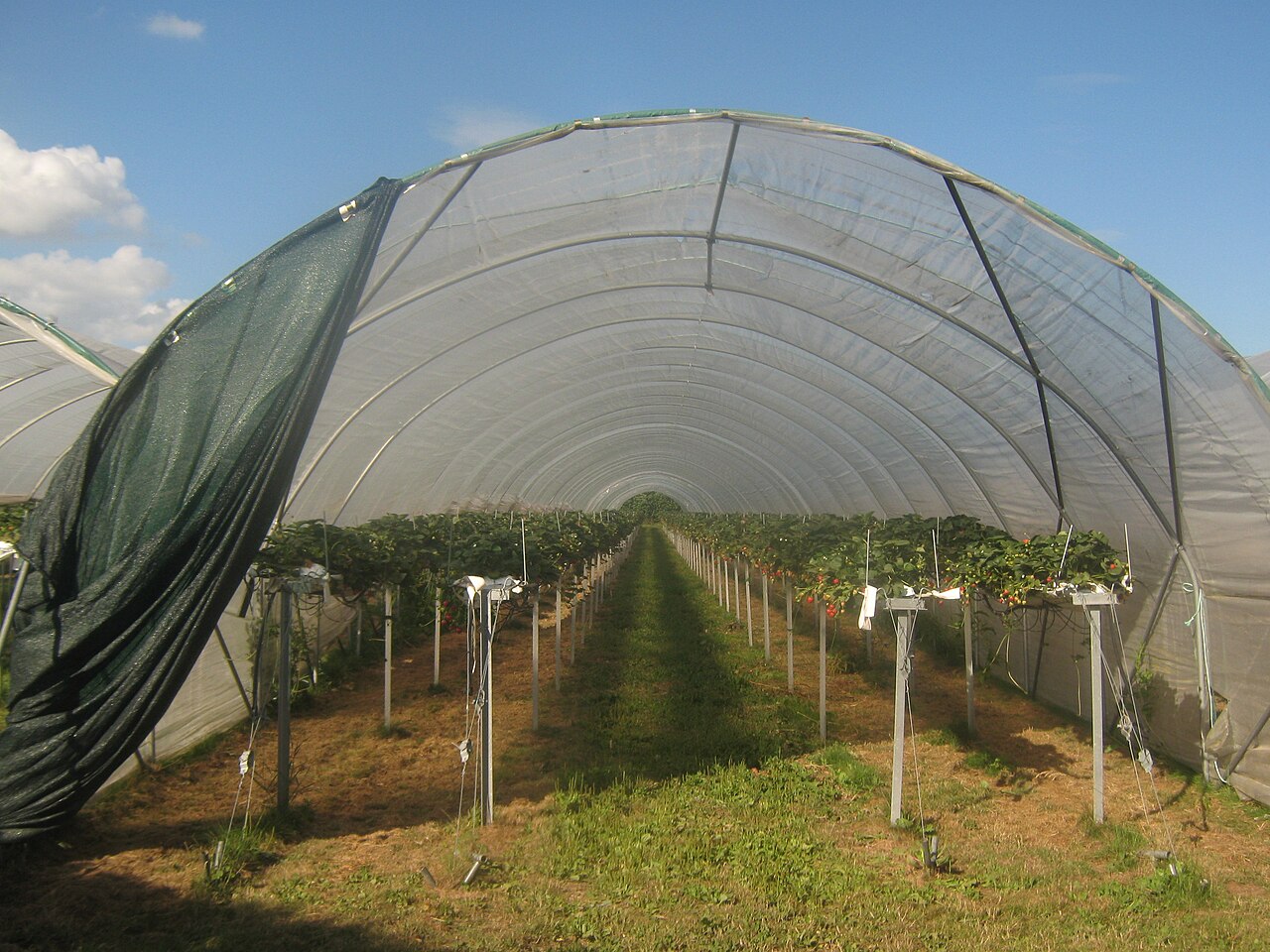
University of Almería researchers released GREENBOT data combining lidar, stereo imagery and inertial measurements from a tomato greenhouse, creating a research resource for localisation and mapping under changing crop conditions.
Source University of Almería researchers / arXiv
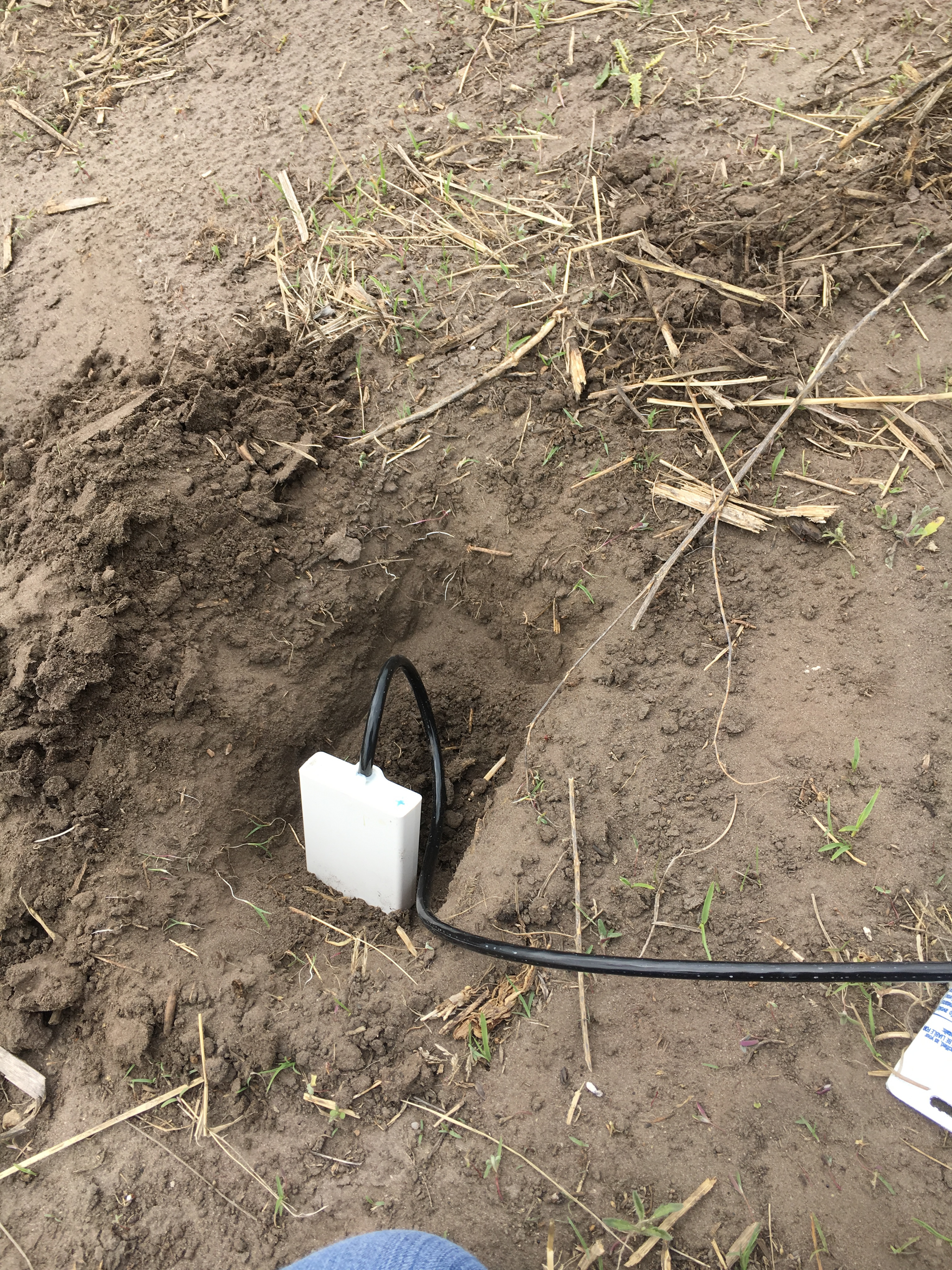
University of Georgia researcher Liang Dong is developing sensors that track plant signals, aiming to give growers earlier warnings of drought, disease and other stresses before visible damage appears.
Source UGA Today
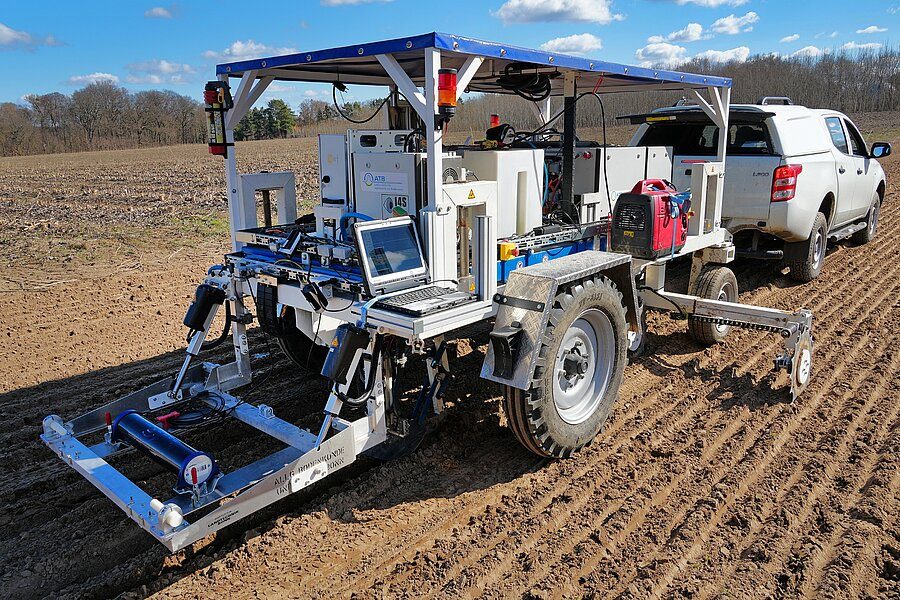
ATB and the Ferdinand-Braun-Institut integrated Raman spectroscopy into a mobile soil platform, demonstrating measurements during movement and opening a route toward more detailed maps for future precision fertilisation.
Source Leibniz Institute for Agricultural Engineering and Bioeconomy (ATB)
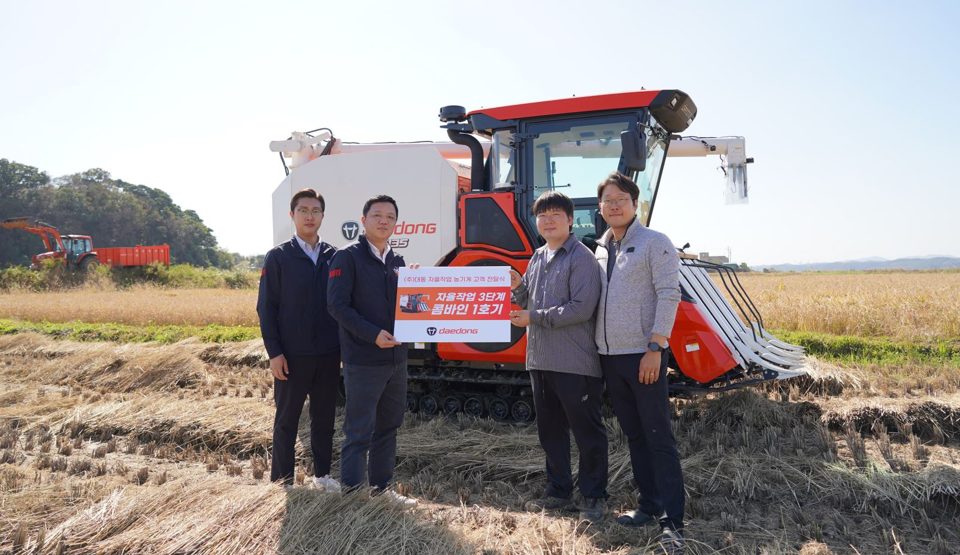
Daedong’s October 2023 DH6135-A launch linked automated combine operation with yield measurements that could be reviewed through its connected-farming application, bringing navigation and agronomic records onto one machine.
Source Daedong
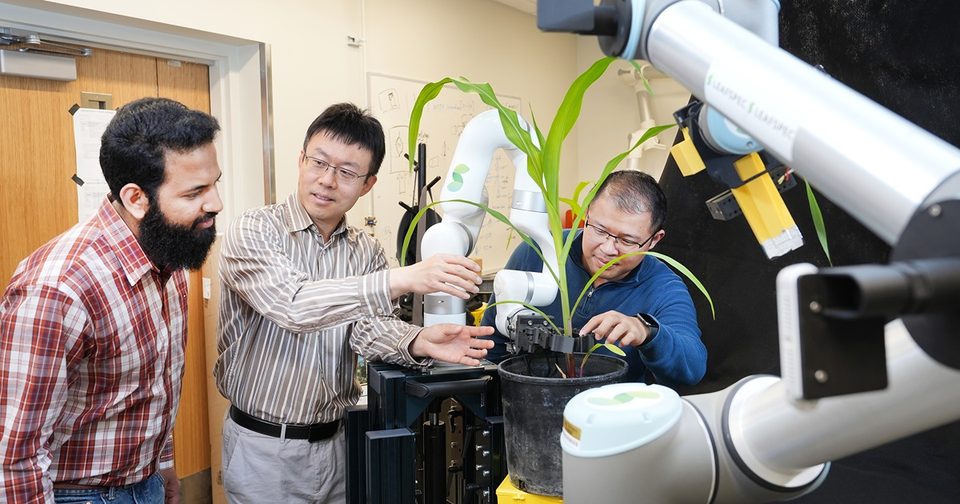
Purdue researchers linked LeafSpec imaging with a two-arm laboratory system in June 2024, using tactile feedback to steady corn plants and guide a scanner along their leaves.
Source Purdue College of Agriculture
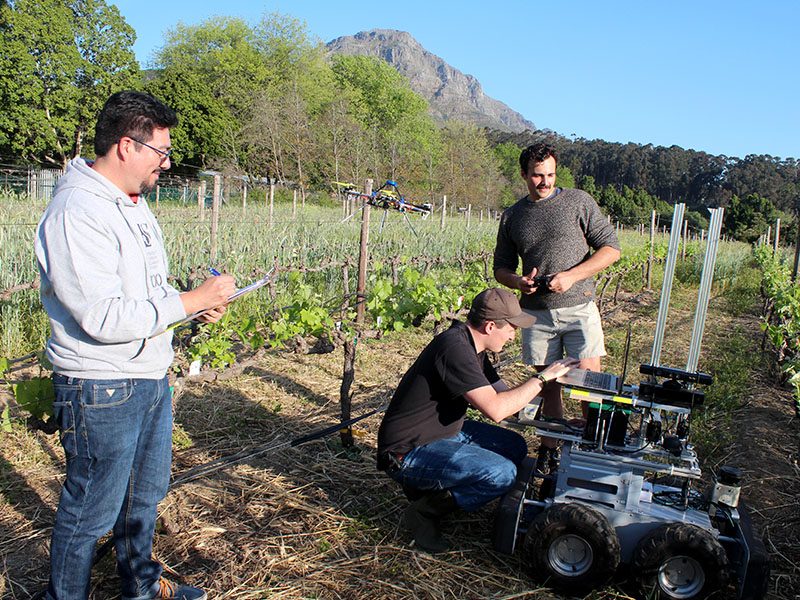
A June 2024 Stellenbosch University feature describes the Dassie vineyard prototype and Carlos Poblete-Echeverría’s digital-agriculture research, linking mobile measurements to more detailed information about individual vines.
Source Stellenbosch University Research for Impact
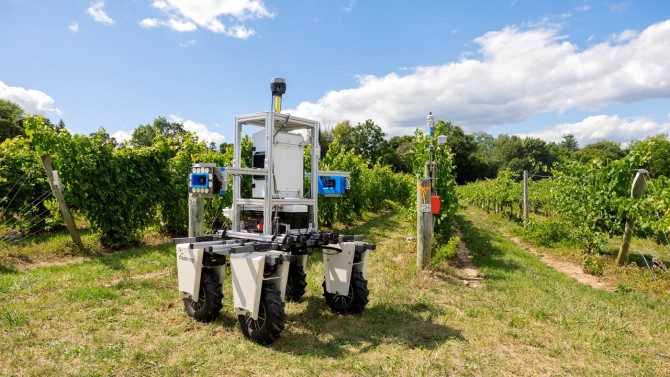
Cornell reported field evaluations of PhytoPatholoBot in September 2025, combining autonomous row travel and canopy imaging to assess grape disease with performance comparable to experienced scouts in the study.
Source Cornell Chronicle
A February 2024 university report describes a solar-powered monitoring and control approach for avocado oil machinery, developed for settings where reliable grid electricity and labour-saving infrastructure are limited.
Source Carnegie Mellon University Africa
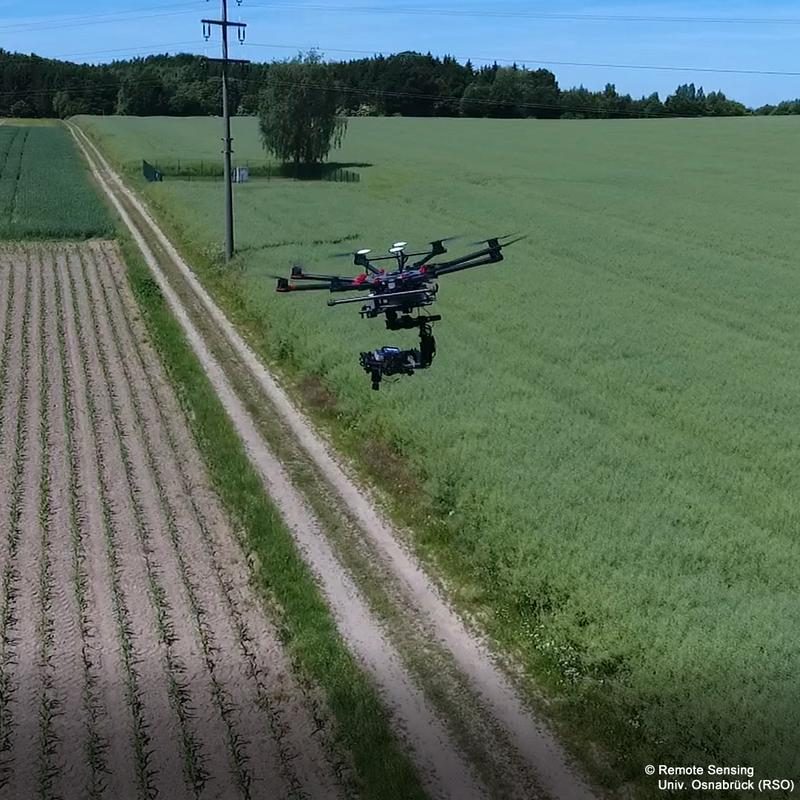
Germany’s Agri-Gaia launch linked machinery data, reusable AI components and legal expertise, with the University of Osnabrück contributing field observations and frameworks for exchanging information across organisations.
Source University of Osnabrück via idw