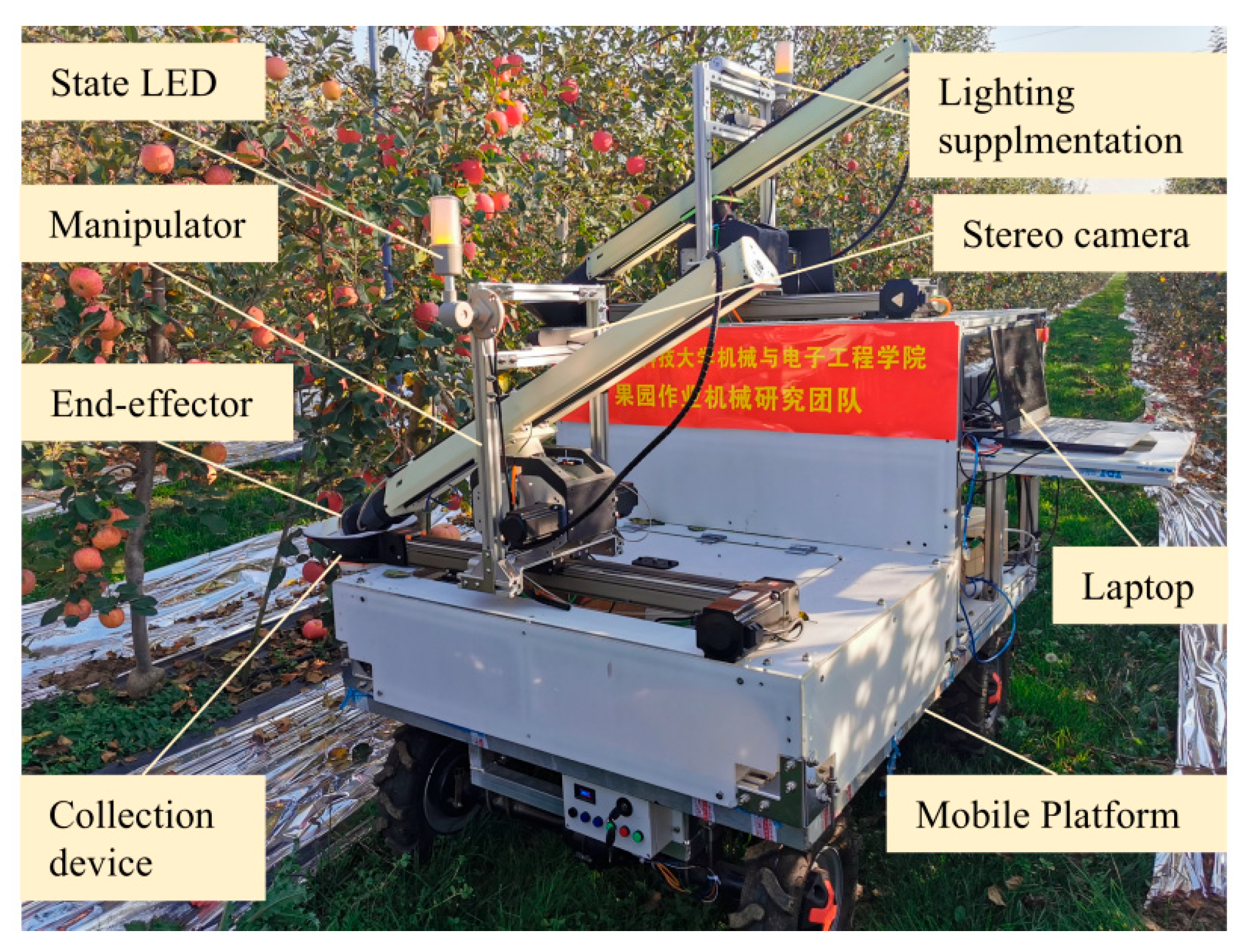
Researchers at Xi'an Technological University and Northwest A&F University published a field evaluation of an apple-harvesting robot on 24 March. Their system combines stereo vision, two simplified four-degree-of-freedom manipulators and a mobile platform, testing three negative-pressure-driven end-effectors in a commercial spindle orchard.
The grasping soft end-effector performed best in the reported comparison: it harvested 80.80% of reachable fruit, while success from detection through collection was 61.59%. The study also reports a 10.89% overall fruit-damage rate and an average single-fruit cycle of 5.27 seconds for that configuration.
These figures show the distinction between a successful picking action and complete harvest performance. The field procedure included an operator repositioning the mobile base, so the results should not be represented as an independently roaming, commercially ready orchard harvesting service.