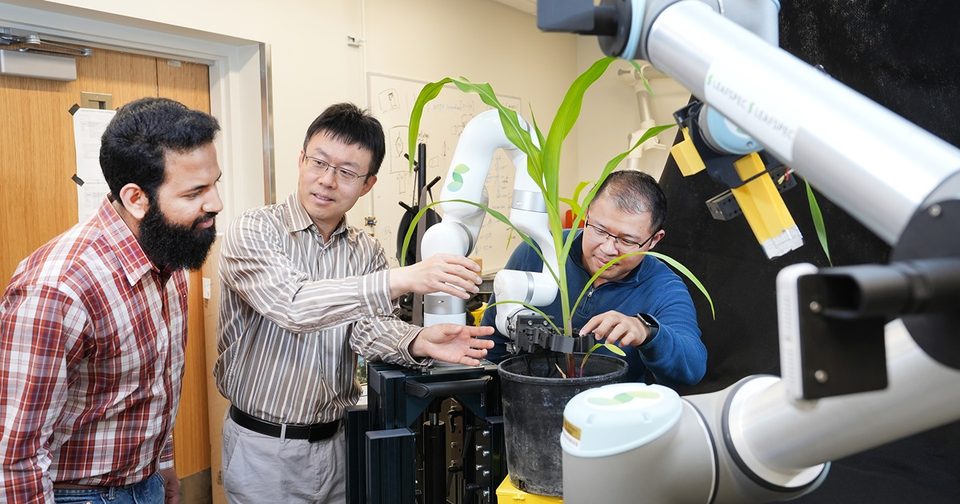
A King's College Cambridge report describes robots made using 3D printing and computer-vision models developed by the Crop Science Centre's Plant-Parasite Interactions group. The team reports moving from screening 90 plants per day to approximately 1,000 per hour.
The system records plant–nematode interactions over time, allowing researchers to connect genetic differences with parasite numbers and size. Repeated imaging also provides a way to study changes across a nematode's life cycle, rather than relying only on a final observation.
The work currently involves model plants. Applying the approach to food crops such as potatoes is a proposed next step. The announcement cites a bioRxiv preprint, so the reported throughput should be read as a research-stage result rather than established on-farm performance or proof that resistant commercial varieties are ready.