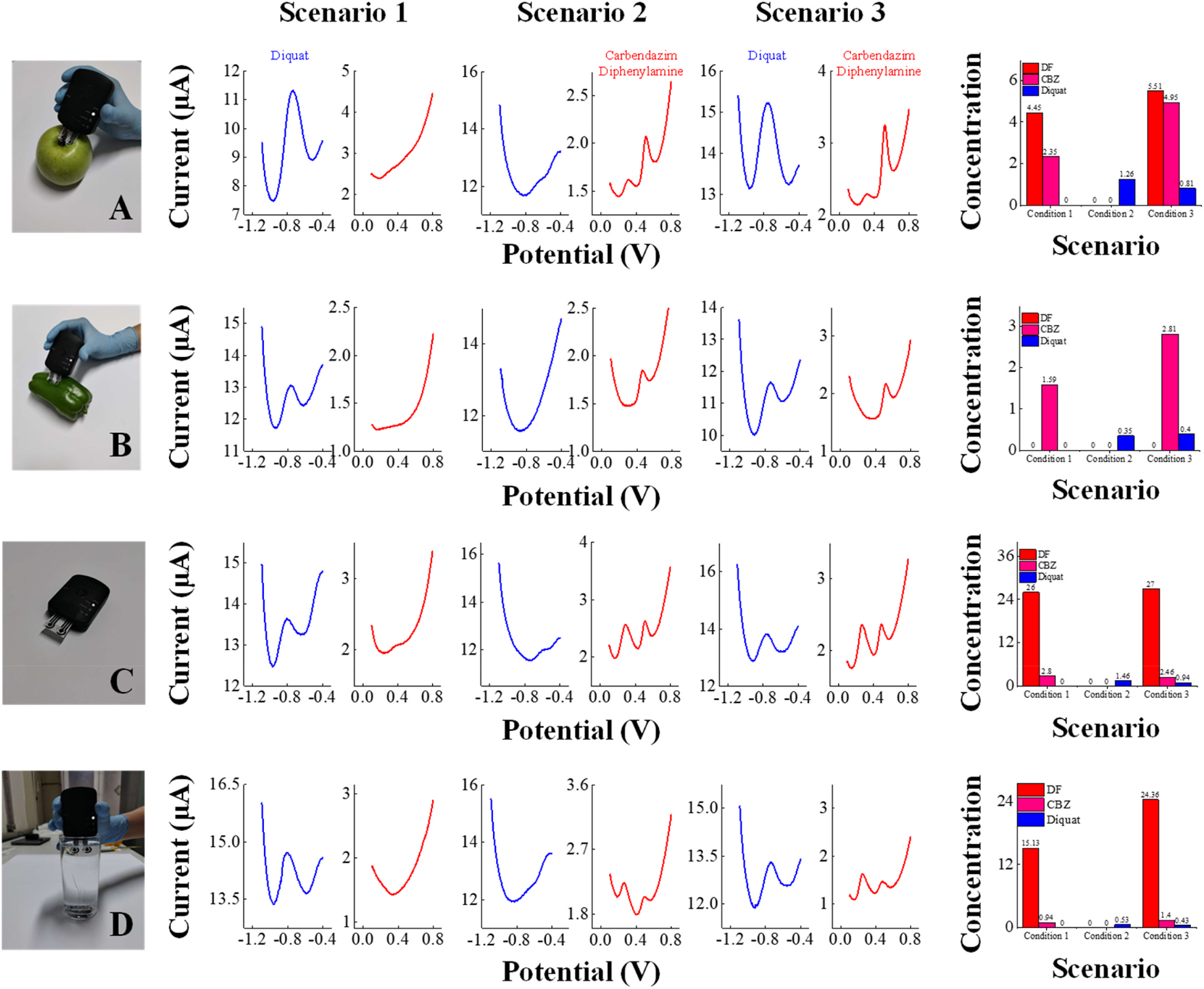
Brazilian researchers have developed a flexible, biodegradable sensing platform printed on cellulose-acetate films. A June FAPESP report describes work by the University of São Paulo and collaborators to detect diquat, carbendazim and diphenylamine using two electrochemical sensing units on one device.
The platform connects to a commercial portable analyser and sends results to a mobile device through Bluetooth. The researchers report a sensing-element fabrication cost below eight US cents; this excludes the analyser and the complete operating workflow.
Tests included pesticide-treated apple and pepper surfaces, using a small liquid droplet to support the electrochemical measurement. The underlying open-access paper appeared online in February. This is research on specific compounds and prepared samples, not evidence that one wearable patch continuously measures every pesticide or replaces a complete food-safety laboratory assessment.