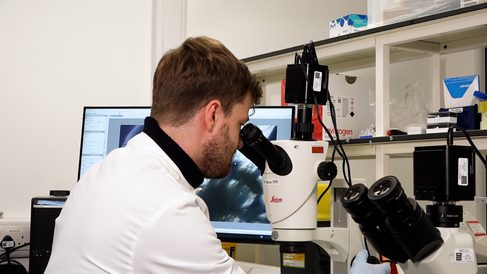
Cambridge’s Plant-Parasite Interactions group is combining 3D-printed robots with computer vision to study how nematodes infect plant roots. The university reports screening capacity increasing from 90 plants per day to approximately 1,000 per hour, alongside repeated imaging that follows parasite development over several days.
Led by Professor Sebastian Eves-van den Akker, the group links plant genetics with measurements such as nematode number and size to investigate susceptibility and resistance. Current work uses model plants; applying the approach to food crops, including potatoes, is a proposed next step. The university links to a bioRxiv preprint describing the system, so this is research progress rather than a deployed crop-protection product.